In the ever-evolving landscape of mobile gaming, Kuro Games' action RPG Wuthering Waves has once again found itself at the center of player discussions. Fast forward to 2026, and the echoes of past controversies still resonate, particularly regarding character design philosophy. The game, celebrated for its stunning visuals and dynamic combat, has navigated a tricky path between artistic expression and regional compliance standards. It's a classic case of 'damned if you do, damned if you don't' for developers trying to please a global audience.
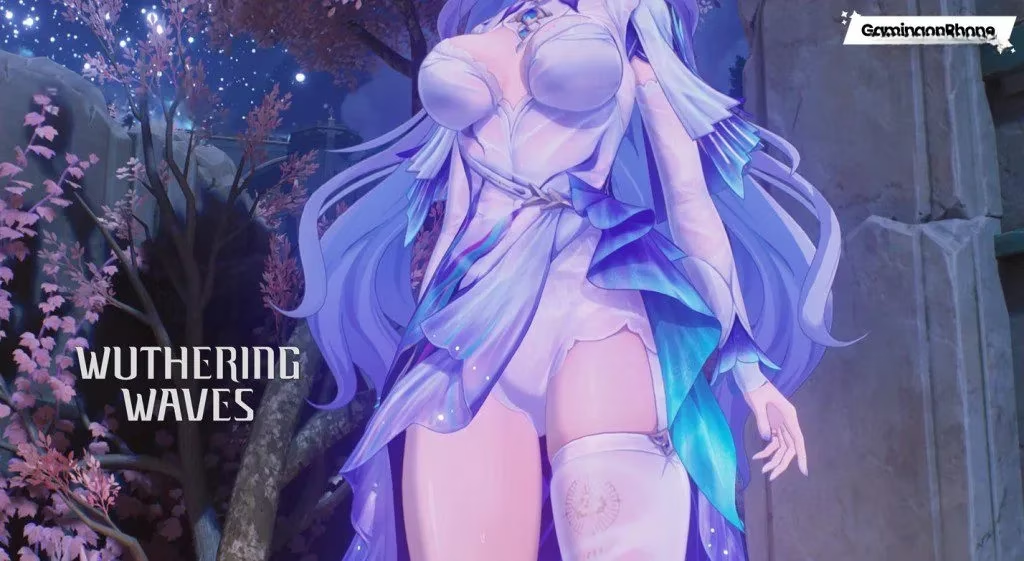
Let's rewind a bit. Back in 2025, the community was abuzz when subtle, unannounced adjustments were made to certain character models. The focal point was Cantarella, the dazzling 5-star Havoc Resonator introduced in Version 2.2. Her design, initially featuring more revealing high-cut undergarments, was quietly modified to a less conspicuous style. Talk about a plot twist nobody saw coming! Alongside her, the weekly boss Fleurdelys received a similar treatment, with added undershorts becoming part of her updated look. Kuro Games, true to form at the time, didn't make a peep—no official statements, no patch notes highlights. It was all very hush-hush.
The immediate fallout was, as you'd expect, a mixed bag. The player base was split right down the middle:
-
The Disappointed Purists: Players who felt the original designs were integral to the characters' appeal and artistic vision. Many called the changes a 'lazy effort' that compromised aesthetic integrity.
-
The Pragmatists: Others speculated it was a strategic move, likely due to external pressures, possibly to adjust the game's age rating for broader market access.
And guess what? The pragmatists might have been onto something. Following these adjustments, Wuthering Waves saw its rating revert to PEGI 12 on major app stores, stepping back from a brief 16+ rating that had allowed for more mature content tags. It was a clear sign that the developers were playing the long game, prioritizing accessibility over pushing boundaries. In the gacha world, that's often the name of the game.
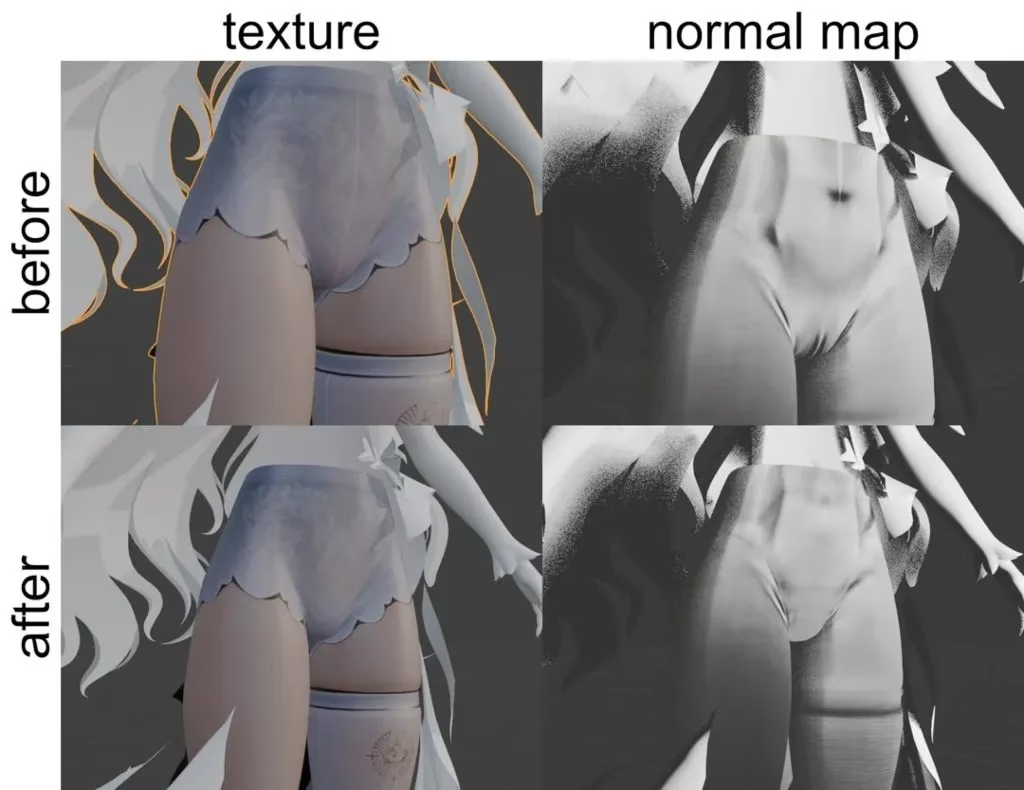
So, where does this leave us in 2026? The conversation has matured beyond simple outrage. The community's current vibe is more about understanding the 'why' behind the 'what.' Here’s a quick breakdown of the prevailing theories and their implications:
| Theory | Likelihood (Community Consensus) | Probable Motivation |
|---|---|---|
| Regulatory Compliance | High 🔴 | Adapting to stricter or evolving global platform (App Store/Play Store) guidelines. |
| Market Expansion | High 🟡 | Lowering the age rating to tap into a younger, wider audience demographic. |
| Artistic Re-evaluation | Medium 🟢 | Internal decision to refine designs for long-term cohesion and brand image. |
| Reaction to Feedback | Low 🔵 | Responding to a segment of player concerns, though unannounced changes suggest otherwise. |
Honestly, it's a tough spot for Kuro Games. On one hand, they have a fanbase that appreciates bold, detailed character art—a major selling point in a crowded genre. On the other, they operate in a global market with a kaleidoscope of regulations and cultural sensitivities. Trying to keep everyone happy is like herding cats; it's practically impossible.
The legacy of the 2025 changes has set a precedent. New characters and content are now scrutinized under a different lens. Players are more observant, wondering if the design they see at launch is the one they'll keep. This has fostered a more nuanced dialogue about:
-
Transparency: A growing desire for clearer communication from developers regarding any cosmetic alterations.
-
Consistency: Ensuring that any design philosophy applied to new content is consistent across the board.
-
Cultural Bridges: Recognizing the challenge of creating a single product for a worldwide audience with diverse standards.
At the end of the day, Wuthering Waves continues to be a powerhouse in the mobile RPG scene. Its core gameplay, story, and world-building remain top-notch. The character design saga, while contentious, highlights the complex dance between creator intent, player expectation, and market reality. It's a reminder that in the live-service game arena, change is the only constant. Whether these moves are seen as censorship or sensible adaptation depends largely on your point of view. One thing's for sure: the community will keep watching, discussing, and, most importantly, playing. After all, the show must go on!